
Portable vs Fixed X-Ray Machines: Clinical Capabilities, Power, and Facility Fit
A detailed breakdown of output generator power (kW), space requirements, diagnostic limitations, and budget trade-offs.

Key Engineering Takeaways & Summary
- •Generator Power Gap: Portable units typically operate between 1.5 kW and 4.0 kW, whereas fixed room suites produce 50 kW to 80 kW.
- •Diagnostic Limitations: Portable machines excel at extremity, pediatric, and non-bariatric chest views, but struggle with dense lumbar spine and pelvic studies.
- •Shielding & Infrastructure: Fixed rooms demand certified primary lead shielding (1.5–2.0 mm Pb) and 3-phase high-voltage power; portable units can often operate with mobile lead screens and standard wall outlets.
- •Cost Differential: Complete portable DR packages run from $25,000 to $45,000; fixed DR room suites range from $85,000 to $200,000+ including installation.
Comparison Overview
Choosing between a portable X-ray unit and a fixed radiographic room suite is one of the most critical capital expenditure decisions for new clinics and expanding facilities. While portable units offer unparalleled mobility and lower upfront purchase prices, fixed suites provide immense generator output (50 kW to 80 kW) that is physically impossible to pack into a lightweight mobile chassis.
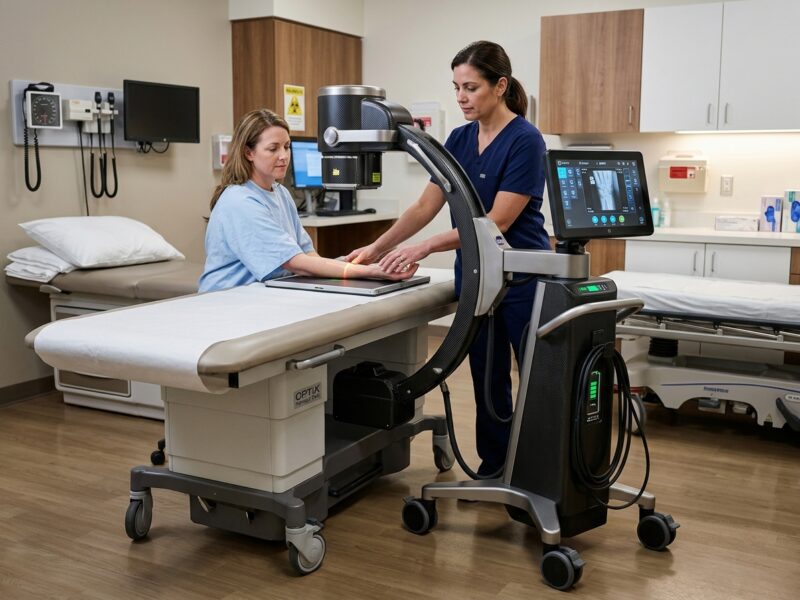
RadField UltraPort 90
A lightweight 2.4 kW battery-powered portable X-ray unit designed for austere environments, sports medicine sideline evaluations, and urgent home healthcare visits.
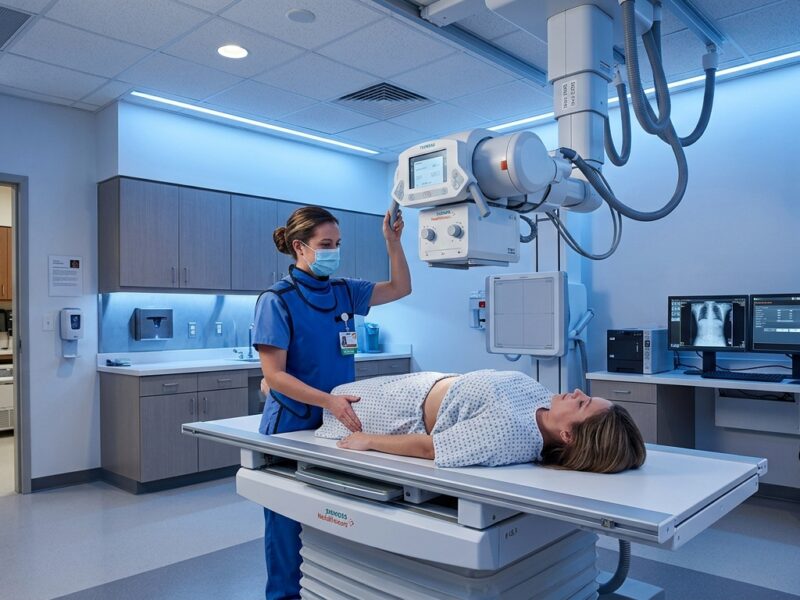
Claritas Pro Suite 65
A robust 65 kW floor-mounted digital radiography room suite configured for mid-to-high volume outpatient orthopedic and hospital diagnostic departments.
Generator Output and Photon Penetration
The primary physical difference lies in the generator inverter and tube anode. A 2.4 kW portable generator caps exposure parameters around 90 kVp and 30 mAs. For dense anatomical regions such as a lateral lumbar spine on a 100 kg patient, photon penetration is limited, forcing longer exposure times (often 0.5 to 1.5 seconds) which introduces respiratory or muscular motion blur. In contrast, a 65 kW fixed suite delivers up to 800 mA, firing the necessary exposure in 10 to 20 milliseconds, cleanly freezing motion.
Facility Requirements and Architectural Site Preparation
Fixed suites require extensive facility investments: structural floor load reinforcement, dedicated high-amperage 3-phase 480V electrical panels, and walls lined with 1/16-inch (1.6 mm) lead sheeting inspected by a certified radiation physicist. Portable units, on the other hand, require minimal architectural modification, frequently operating on single-phase 110V/220V power.
Patient Throughput and Ergonomic Workflow
In high-volume orthopedic centers imaging 50+ patients daily, fixed rooms with motorized tracking and elevating floating tables provide unmatched patient turnaround. Technologists can position an elderly patient in seconds without manual lifting. Conversely, portable units require manual stand adjustment and manual cassette alignment.
Best Suited For: Clinical Recommendations
Sports Medicine, Urgent Home Visits & Disaster Relief
Essential mobility, battery power, and rapid transit between sideline tents or patient residences.
High-Volume Orthopedic & Outpatient Surgical Centers
Uncompromised 65 kW power, rapid exposure times, and heavy 295 kg patient table support.
Editorial Verdict
If your clinical caseload involves high-volume spine, pelvis, and bariatric imaging, a fixed radiographic suite is indispensable. For urgent care clinics handling predominantly extremities and routine chests, or practices needing flexible room utilization, a high-frequency portable DR unit offers outstanding return on investment.