
Floor-Mounted vs Ceiling-Suspended X-Ray Suites: Architectural and Clinical Comparison
Examining installation complexity, room height requirements, patient maneuverability, and structural engineering costs.

Key Engineering Takeaways & Summary
- •Overhead Clearance: Ceiling-suspended systems eliminate floor rails, allowing medical beds, wheelchairs, and crash carts to navigate from any angle.
- •Ceiling Structural Load: Ceiling cranes require certified structural steel bridges capable of supporting 500+ kg dynamic loads without deflecting more than 1 mm.
- •Installation Downtime: Floor-mounted suites install in 3–5 days; ceiling-suspended installations often require 2–3 weeks of general contractor work.
- •Cost Comparison: Floor-mounted suites run $80,000–$140,000 all-in; ceiling suites run $120,000–$250,000+ when architectural ceiling modifications are included.
Comparison Overview
Radiology directors planning a new hospital or outpatient imaging suite must decide whether to install an overhead ceiling-suspended crane system or a floor-mounted tracking rail. While ceiling-suspended suites offer total floor freedom for trauma gurneys, they entail complex structural ceiling unistrut remodeling that can double total facility costs.
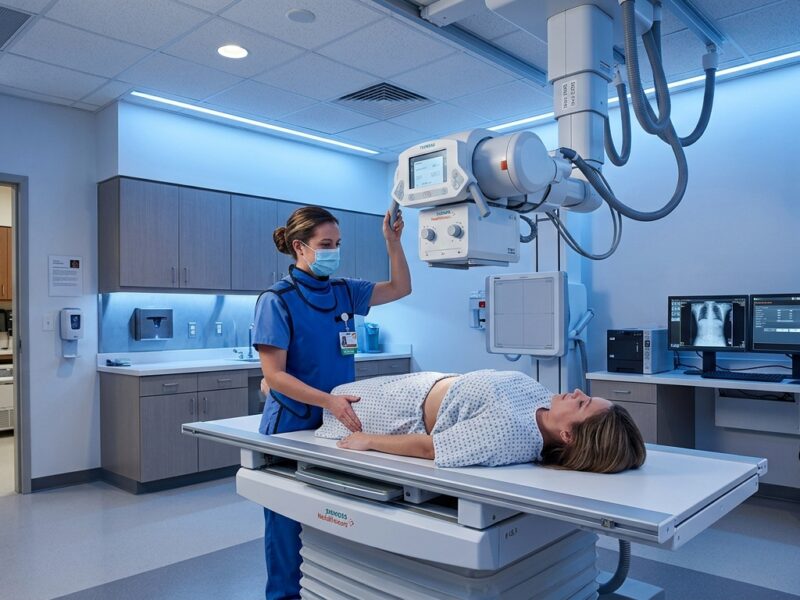
Claritas Pro Suite 65
A robust 65 kW floor-mounted digital radiography room suite configured for mid-to-high volume outpatient orthopedic and hospital diagnostic departments.
NovaVision Ceiling-Suspended DR Suite
A premium 80 kW ceiling-suspended digital radiography suite with robotic auto-tracking, stitching software for full-spine/leg imaging, and motorized height adjustments.
Architectural Realities: Above the Ceiling Tile
Before a ceiling suspension crane can be ordered, hospital facilities engineers must inspect the space above the drop ceiling. Fire sprinkler lines, HVAC ducts, electrical conduits, and pneumatic tube lines often occupy the plenum space. Rerouting hospital mechanical infrastructure to accommodate rigid steel unistrut channels can easily add $30,000 to $60,000 to project costs.
Trauma Bay Access and Ergonomics
In emergency trauma environments, however, ceiling suspension is worth every penny. When a trauma patient arrives on a life-support stretcher surrounded by doctors, respiratory therapists, and IV poles, a floor rail is a tripping hazard. The overhead tube crane can be swung in from any angle without disturbing floor equipment.
Best Suited For: Clinical Recommendations
Outpatient Orthopedics, Urgent Care & Leased Facilities
Rapid installation, lower capital expense, and no structural ceiling modifications needed.
Level 1 Trauma Centers & High-Acuity Hospital Suites
Unrestricted 360-degree floor clearance and motorized auto-tracking for emergency gurneys.
Editorial Verdict
For 80% of outpatient clinics and community imaging centers, a modern floor-mounted DR suite provides identical diagnostic image quality at vastly reduced installation complexity. Ceiling suspension remains the champion for acute hospital trauma centers where floor space is precious.